Why Your Google Business Profile Isn’t Driving Calls (And What That Really Means)
Google Business Profile isn’t driving calls? See why property-based businesses struggle to convert views into inquiries, and how trust (not tactics) fixes it.
GET LEADSMARKETING STRATEGY
Lauren Poling
2/3/20268 min read
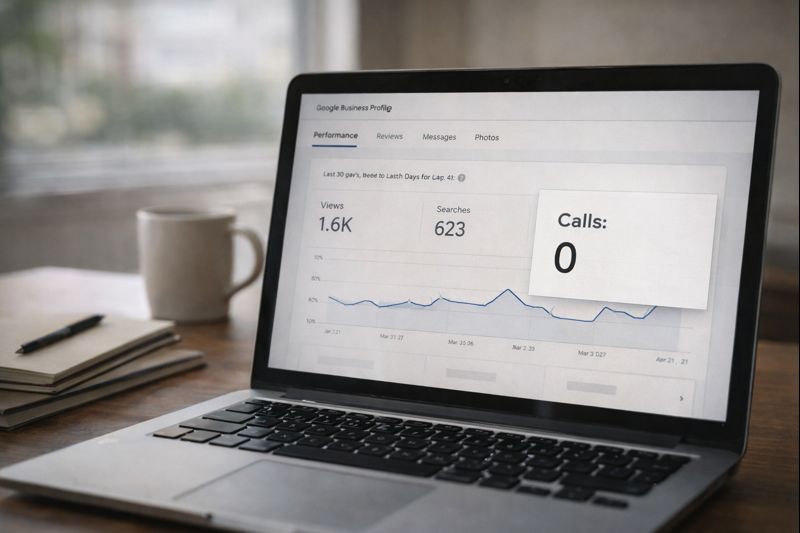
Your Google Business Profile is active, you have photos up, and maybe you have published a few posts. Yet, you still stare at your phone wondering why it is so quiet. You might even find yourself searching “google business profile not driving calls,” only to get surface-level advice that doesn’t explain what’s actually happening.
If that sounds familiar, especially in affordable housing, multi family, or senior living, you are not alone. Many property-based businesses struggle to bridge the gap between profile views and real inquiries.
For property-based businesses, showing up on Google is only half the equation. The other half is getting someone to feel safe enough to pick up the phone. Housing decisions are personal and high-stakes.
Deciding where to live is rarely a quick decision. It is a decision driven by confidence and perceived safety. People need clear reasons to feel confident choosing you before the phone ever rings.
Why Your Google Business Profile Isn’t Driving Calls Is Rarely a Technical Problem
We work exclusively with property-based businesses, including affordable housing communities, real estate teams, and senior living operators. Our experience comes from hands-on management of Google Business Profiles and local visibility strategy every day. We rely on observed patterns, real performance data, and repeated outcomes across property markets.
Over time, we have seen a consistent pattern across property-based businesses. Profiles that look “complete” on the surface still fail to generate calls because they feel vague or generic to the person searching. Showing up in results is not the same as being chosen. In housing-related decisions, people are scanning for signals of stability, clarity, and professionalism, and many Google Business Profiles simply do not answer those unspoken questions well enough to prompt action.
Housing decisions are driven by perceived risk, not convenience. A basic or generic profile does little to reduce the anxiety behind searches like “affordable apartments near me” or “senior living options nearby.” Before someone ever considers calling, they are subconsciously asking whether a business feels stable, legitimate, and trustworthy. If a profile does not answer those concerns clearly, it does not earn the next step, no matter how visible it is.
Platform knowledge explains how Google Business Profiles work, but it does not explain why someone chooses one property over another. Calls increase when a profile reduces uncertainty for the person searching. If the profile feels vague, generic, or impersonal, it creates hesitation. In property decisions, hesitation usually means the search continues elsewhere.
Property Decisions Feel Risky, So People Move Slowly
Think about the last time you picked a restaurant on google maps. You probably looked at a couple of reviews and photos, then just picked something. Now compare that to moving your family into an affordable housing community.
Different weight brings different emotions. With housing, people think about safety, money, stability, and neighbors. They picture their kids walking around the property.
The choice lingers for years, not an hour like a dinner reservation. Because the stakes feel higher, people want to feel confident before they reach out. That means they often see your profile several times over weeks or months.
They may click your website, check service quality signals like maintenance reviews, and come back later. The call is rarely step one. It is the final step after quiet research.
The Psychology Behind Google Business Profile Engagement
People rarely say this out loud, but they almost always choose what feels safest. They look for signals that you are stable and present. They scan for anything that feels off or inconsistent.
Repeated exposure matters here. When they keep seeing the same business in google search with consistent information, their brain starts filing that brand under "reliable". Studies in behavioral science show that familiarity breeds trust.
Seeing your profile multiple times helps you feel less like a risk. Google Business Profiles also create a first impression long before anyone clicks to call. A blurry cover photo or generic language adds a small layer of doubt.
Stack a few of those doubts and you have a very quiet phone. This happens even if you have high profile views in your stats.
Why Visibility Without Credibility Does Not Work In Property Markets
You might be ranking decently and still wonder why you get no calls. Ranking gives you a seat at the table, but credibility wins the conversation. High business profile views mean nothing if users do not trust what they see.
Profiles that lack clarity make people pause. Maybe your business category is vague, or your description reads like a copy paste job. That small pause is all it takes for someone to scroll past.
Mixed signals slow decision making. If your profile says one thing and your website hints at something else, people pull back. In housing, they rarely push through confusion.
They just leave. Credibility is what turns that hesitation into confidence. You need to provide a clear path forward.
What Actually Drives Calls From A Google Business Profile
It is tempting to look for a single fix, like adding more keywords. In reality, calls come from multiple trust signals reinforcing each other over time. This explains why many businesses feel like nothing is working.
Google evaluates relevance, legitimacy, and user behavior at the same time. It watches how people interact with your listing and how they behave after clicking through. It also weighs your review management history and how often your data changes.
Property-based searches require stronger trust signals than low-stakes decisions. Your Google Business Profile does not live in a bubble. Google compares it to your website and your citations.
When those signals align, Google begins to treat the profile as a legitimate local brand rather than a passive listing. Profiles that demonstrate sustained activity tend to earn more engagement over time, not because of one update, but because consistency signals reliability in property markets.
Why Google Business Profiles Are The Starting Line, Not The Finish Line
Your profile is the most public surface of your brand in local search. It is the card Google shows strangers before they meet you anywhere else. But many property businesses treat it like a one time setup.
Accuracy matters here, especially phone number visibility. If a user cannot find your number instantly, they move on. Outdated hours or a phone number that goes to a full voicemail push people away.
It is rarely about a technical glitch. More often, it is about whether the profile feels actively managed or quietly neglected. Profiles that stagnate tend to fall into low-engagement patterns over time.
Your profile should anchor credibility and guide people toward a confident decision. When it functions only as a static business card, trust stalls before action happens.
What 4 Trust Signals Matter Most For Property Based Businesses
For property-based businesses, there are four trust signals that most directly influence whether a Google Business Profile drives calls or gets passed over. These signals reduce friction for searchers who are quietly evaluating risk before they ever reach out.
Clear descriptions reduce uncertainty immediately. Searchers should understand who you serve, where you operate, and what type of housing or service you provide within seconds. When that clarity is missing, hesitation sets in and people keep scrolling.
Specific, recent reviews help people feel confident that your property is active and well-managed. Reviews that mention maintenance response, communication, or staff behavior address the exact concerns prospects already have. Consistent review activity also signals that residents are not ignored after move-in.
Professional, current photos allow people to imagine real life at your property. Clear visuals reduce uncertainty and set realistic expectations. When your photos align with what people see on your website, your business feels stable and trustworthy rather than speculative.
Consistent business information across your Google Business Profile and website reinforces legitimacy. Matching name, address, phone number, and messaging signals that your business is established and well-maintained. Small inconsistencies create doubt, while alignment builds confidence.
Together, these trust signals help transform visibility into action. When they are missing or inconsistent, calls stall even if your profile is getting views.
Why Consistency Beats Paid Ads Over Time
Paid ads can create quick spikes in attention, but they rarely build lasting confidence. The moment you stop paying, the visibility disappears. For property-based businesses, that stop-and-start exposure works against trust rather than building it.
Housing decisions unfold slowly. People search, compare, leave, return, and reassess over time. When your business shows up consistently during that process, it begins to feel familiar. Familiarity lowers perceived risk, which is far more influential than a limited-time offer or discount.
Consistency also sends strong signals to Google. Profiles that are updated regularly, earn ongoing reviews, and reflect steady activity are treated as more reliable. Google favors businesses that appear stable and well-maintained, especially in high-consideration categories like housing.
This is where many property teams struggle. Staying consistent is tedious. Posting regularly, monitoring reviews, updating photos, and keeping messaging aligned is time-consuming and easy to deprioritize. When consistency breaks, visibility and engagement quietly stall.
Over time, businesses that maintain steady visibility outperform those that rely on bursts of paid traffic. Not because they are louder, but because they feel dependable. In property markets, dependability is what earns calls.
This is why many property-based businesses decide not to manage visibility internally. Consistency is what drives results, but it is difficult to maintain alongside leasing, operations, and resident support. When visibility is handled intentionally and consistently, trust compounds and inquiries follow naturally. This is why many property-based businesses choose to outsource visibility management rather than trying to maintain it alongside day-to-day operations.
How Google Is Changing Reporting Around Calls
Some property teams think their Google Business Profile has stopped driving calls, when what has actually changed is how calls are reported.
Google Business Profiles still show call activity, but the data is limited. You see call counts, not full context. You cannot tell who called, what happened after, or whether those calls turned into real inquiries.
This makes it easy to misread performance. A flat or declining call number can feel alarming, even when interest, clicks, or visits are still strong.
For property-based businesses, this means calls should be evaluated alongside leasing activity, inquiry forms, tours, and follow-up data. Calls are only one signal, not the full picture.
When performance feels unclear, the solution is not guessing or panicking. It is zooming out and evaluating visibility, trust, and engagement together.
What This Looks Like For Property Based Businesses In Real Life
We see the same pattern across real estate teams, affordable housing communities, and senior living operators. People rarely reach out on first contact. They watch, compare, and quietly evaluate long before they ever make a call.
Trust reduces the number of people who keep shopping competitors. When your profile answers key questions and shows real feedback, people stop searching. They start focusing on your community.
In senior living, confidence has to come before tours ever get booked. Families search multiple times over many weeks. For more structured support here, you can look at property-based marketing solutions to aid this journey.
How Strategic Optimization Supports Calls Over Time
When a Google Business Profile starts generating more calls, it is rarely because of one change. It is the result of sustained alignment between messaging, activity, and trust signals over time.
For property-based businesses, optimization is not about chasing tactics. It is about consistently reinforcing credibility in a way that matches how people actually make housing decisions.
We see calls increase when profiles are treated as living assets, not static listings. When updates stay consistent, reviews are actively managed, and messaging stays clear, Google and users both respond.
This is also where many teams get stuck. The work itself is not complicated, but it is repetitive, ongoing, and easy to deprioritize when leasing, operations, and resident needs take over. When consistency breaks, calls quietly stall.
Strategic optimization works because it removes doubt over time. It helps the right people feel confident enough to stop comparing and finally reach out.
Conclusion
If your Google Business Profile is active but not driving calls, the issue is rarely technical. It is almost always about confidence.
Property-based businesses win when they reduce perceived risk. That happens when visibility, credibility, and consistency work together over time. Profiles that feel clear, current, and trustworthy get chosen. Profiles that feel vague or neglected get skipped, even when they show up in search.
You do not need to chase hacks or post endlessly to fix this. You need clarity on where trust is breaking down and which signals matter most for your specific market.
If you want to understand why your profile is getting views but not calls, start with a free local marketing audit.
We review how your Google presence, messaging, and trust signals are working together and identify what is holding inquiries back, without guesswork or generic advice.
👉 Get your free local marketing audit:
https://realtystreamliners.com/free-local-marketing-audit